A Singapore PR rejection stings, and ICA makes it harder by never telling you why. It sends only a short, standard line: “your application has been unsuccessful.” This guide sets out the most common reasons a Singapore PR application is rejected in 2026, so you can work out the likely cause and fix it before you try again.
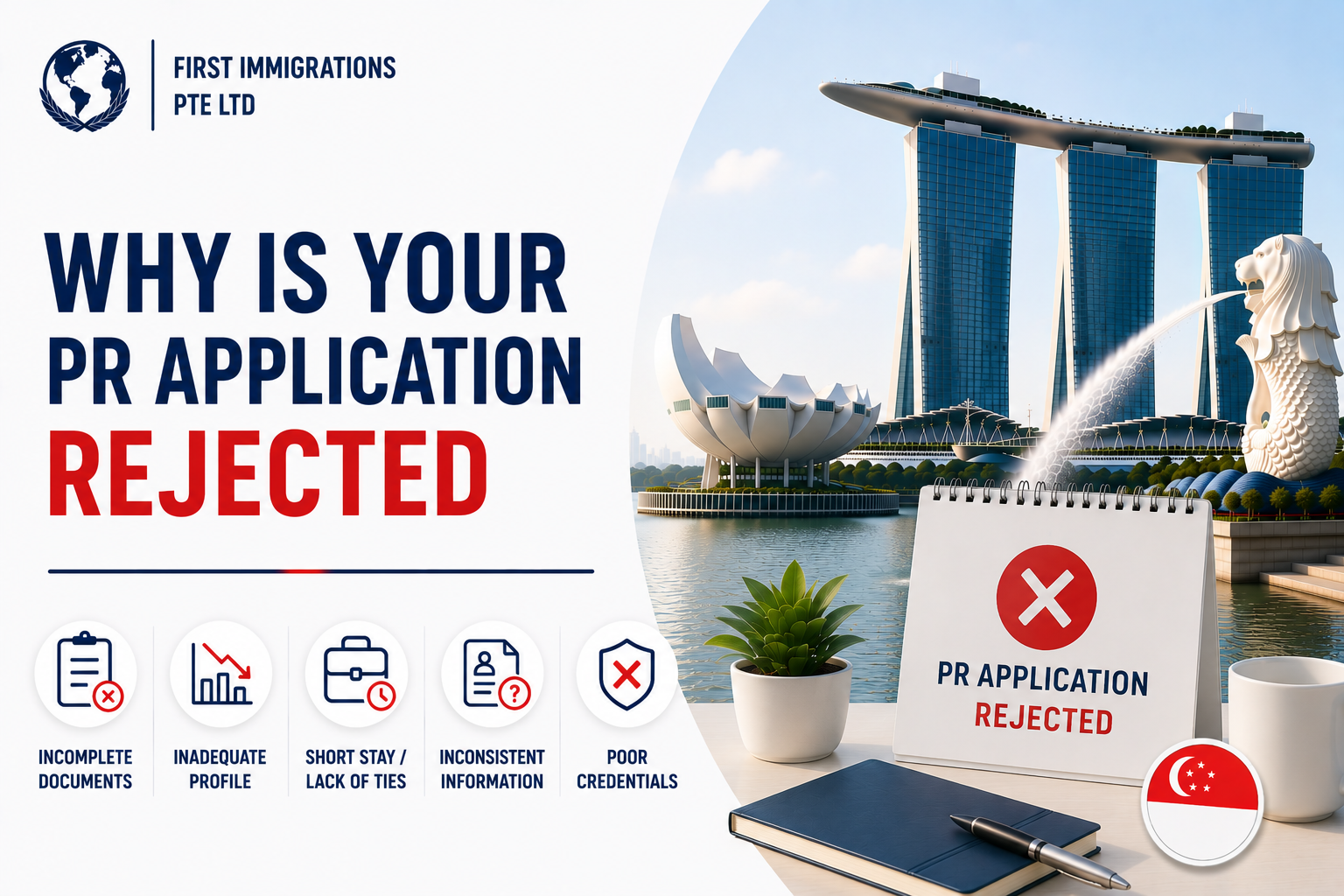
Quick answer: ICA does not disclose reasons for a PR rejection. In practice, applications fail most often for a short time in Singapore, a salary that is low or not progressing, a weak or unstable employment history, thin integration, weak family ties, incomplete or inconsistent documents, or simply a profile that was not competitive enough at the time. Only about one in three applications succeeds, so a rejection often means “not yet”, not “never”.
First, why ICA gives no reason
ICA assesses PR holistically and does not publish a scoring formula or a reason for any rejection. That silence is deliberate. It means you have to diagnose the likely weakness yourself, which is exactly what this guide helps with. It also means a rejection is not a verdict on you personally; it reflects how your profile compared, on the day, against a competitive pool.
The most common reasons PR applications are rejected
| Reason | What ICA is likely seeing |
| Applied too early | Less than 2 years in Singapore, no real track record |
| Salary too low or flat | Below the median for your age and sector, or no progression |
| Weak or unstable employment | Job-hopping, gaps, or a less-favoured sector |
| Thin integration | Tax-paying only, with no sign of community roots |
| Weak family ties | No spouse, child, or family who is a citizen or PR |
| Incomplete or inconsistent documents | Missing files, or details that clash with ICA’s records |
| Profile not yet competitive | Each factor borderline, and together not standing out |
The reasons in more detail
Applying too early. The single most common mistake. Most successful applicants apply after two to three years of stable work and tax. In year one, there is little for ICA to assess.
Salary too low, or flat. Income is weighed heavily, and benchmarked against local peers of your age. A salary that has not risen in years reads as a stalled career, even if it is high.
Unstable employment. Frequent job changes, probation, or gaps weaken the stability signal. So can a weak employer profile or a less-favoured sector.
Thin integration. Paying tax is not enough. ICA looks for genuine, documented involvement in the community over time. Its absence reads as transactional.
Weak family ties. Family roots in Singapore help. Without a spouse, child, or family who is a citizen or PR, the rest of your profile has to carry more weight.
Document problems. Missing documents, an out-of-date employer letter, uncertified translations, or details that do not match across your file can sink a borderline case. See our PR documents checklist.
Not competitive enough. Sometimes nothing is “wrong”; the profile is simply not strong enough against the pool. Our guide on the PR approval rate explains how competitive it is.
How to work out which reason applied to you
Since ICA will not say, look honestly at your profile against the list above. Ask: was I here long enough? Is my salary strong and rising for my age? Is my employment stable? Can I show real integration? Were my documents complete and consistent? The weakest one or two answers are usually your rejection reason, and your to-do list. Our guide on the factors that affect your PR chances helps you self-assess.
What to do after a rejection
You have two routes: appeal, or reapply. Appeal only if you have new, substantive information ICA did not have (a promotion, a large raise, a change in family circumstances). Otherwise, wait, strengthen the weak areas, and reapply, usually after 12 to 24 months. See our guides on what to do after a PR rejection and appeal vs reapply.
How to avoid rejection next time
- Apply at two to three years, not in year one.
- Show salary progression, not a flat income.
- Keep employment stable and your tax and CPF records clean.
- Build and document genuine integration.
- Submit a complete, consistent file, with a strong cover letter.
Our PR application tips go deeper.
How First Immigration can help
Because ICA gives no reasons, an honest outside read on why you were rejected, and whether to appeal or reapply, is worth a lot. First Immigration helps you:
- Diagnose the likely weakness in your profile.
- Decide honestly between appealing and reapplying.
- Rebuild a stronger case for next time.
Speak to our consultants through the contact page.
Frequently asked questions
Why was my Singapore PR application rejected?
ICA does not give reasons. Common causes are applying too early, a low or flat salary, unstable employment, thin integration, weak family ties, incomplete documents, or a profile that was not competitive enough at the time.
Does ICA tell you why a PR application is rejected?
No. It sends only a short, standard notification. You have to diagnose the likely reason from your own profile.
Is a PR rejection permanent?
No. It often means “not yet”. Many applicants succeed later after strengthening their profile and reapplying.
Can I appeal a PR rejection?
Yes, within six months, but only if you have new, substantive information. Otherwise, reapplying later is usually the better route.
How long should I wait to reapply after a rejection?
Usually 12 to 24 months, so you can materially strengthen your profile.
Does a low salary cause rejection?
It can. Salary is weighed heavily and benchmarked against your age and sector. A low or flat salary is a common weakness.
Can incomplete documents cause a rejection?
Yes. Missing files, uncertified translations, or inconsistent details can sink a borderline application.
Will reapplying with the same profile work?
Usually not. The same information tends to produce the same result. Strengthen the weak areas first.