Singapore is one of the most expensive cities in the world, but the real cost of living depends a lot on how you live, and on your immigration status. This guide breaks down the typical monthly costs in 2026, from rent to food to transport, gives sample budgets, and shows how becoming a Singapore PR can meaningfully lower what you pay.
Quick answer: A single person spends roughly S$1,500 a month before rent, or around S$4,900 including city-centre rent. A family of four typically needs S$12,000 to S$16,000 a month all in, with rent the biggest item. Singapore ranks among the ten most expensive cities globally. Your status matters: PRs pay far less than foreigners for housing (resale HDB vs private rent), healthcare, and schooling, which can cut a family’s costs substantially.
How expensive is Singapore, really?
Singapore consistently ranks near the top of global cost-of-living lists, scoring about 87.7 on Numbeo’s index and placing around 9th in the world in 2026. Housing, cars, and private schooling are the big drivers. That said, everyday essentials, hawker food, public transport, and public healthcare, are efficient and, for residents, subsidised, so many people live well below the “expat” headline figures.
Monthly cost snapshot (2026)
| Household | Before rent | Rough all-in (with rent) |
| Single person | ~S$1,500/month | ~S$4,000 to S$5,000 |
| Couple | ~S$2,800/month | ~S$5,500 to S$7,500 |
| Family of four | ~S$5,400/month | ~S$12,000 to S$16,000 |
These are typical ranges; frugal households spend far less, and premium lifestyles far more.
Housing and rent
Rent is the single biggest cost, and where status makes the most difference.
| Home type | City centre | Outside centre |
| HDB room (rented) | S$1,200 to S$1,600 | S$1,000 to S$1,400 |
| 1-bedroom apartment | ~S$2,676 | ~S$2,054 |
| 3-bedroom apartment | ~S$5,499 | ~S$3,735 |
The status angle: foreigners rent, at these prices. A PR can buy a resale HDB flat (after three years), turning rent into mortgage on a subsidised home, and pays 5% stamp duty on a first property against 60% for a foreigner. Over a few years, that gap is enormous. See our guide on Singapore PR benefits.
Food and dining
Singapore’s hawker culture keeps food affordable if you eat local.
- Hawker meal: around S$4 to S$8.
- Casual restaurant meal: around S$15 to S$25.
- Monthly groceries: roughly S$300 to S$600 per person, depending on habits.
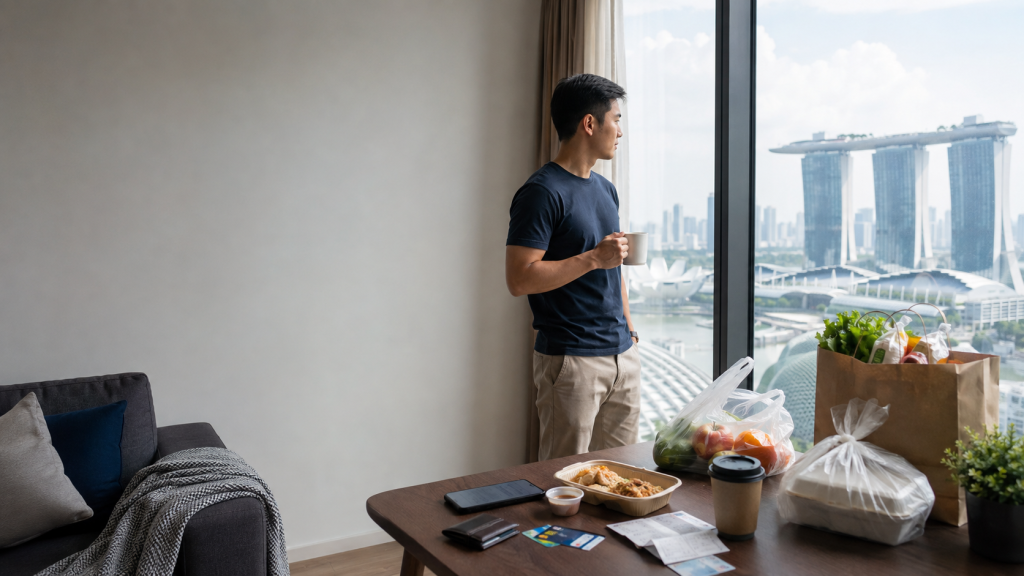
A single person eating mostly hawker food might spend S$500 to S$800 a month; heavy restaurant and imported-grocery habits push this much higher.
Transport
Public transport is cheap and excellent.
- MRT or bus trip: around S$1 to S$2.
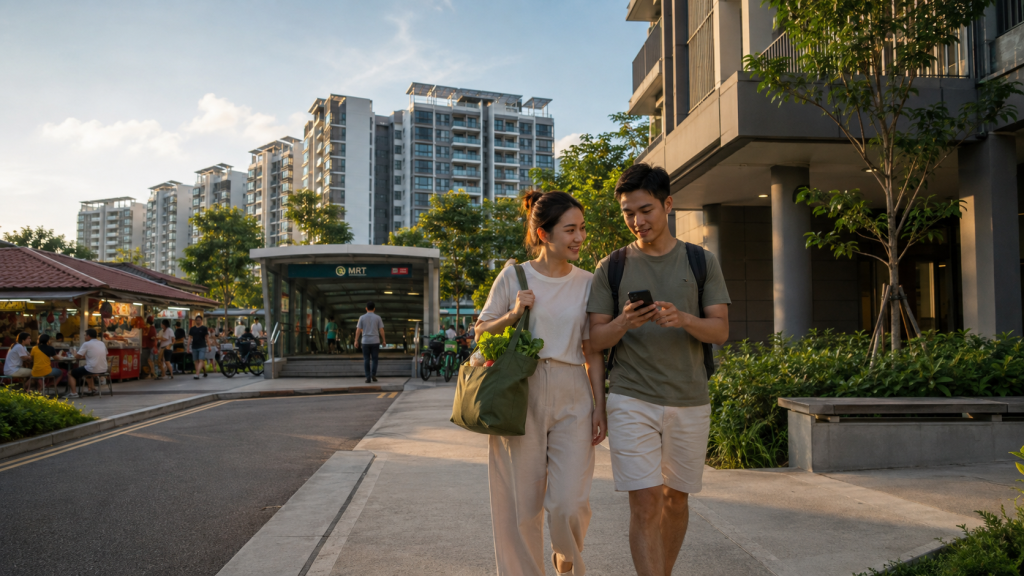
- Monthly public transport: roughly S$100 to S$150 for a regular commuter.
- Owning a car: very expensive, because of the Certificate of Entitlement (COE) and taxes. A modest car can cost well over S$100,000 to own over its life, which is why most residents use public transport.
Utilities and other essentials
| Item | Typical monthly cost |
| Utilities (electricity, water, gas) for a flat | S$150 to S$250 |
| Mobile and broadband | S$50 to S$100 |
| Health insurance (foreigner) | Varies; essential without subsidies |
| Domestic helper (if hired) | Salary plus levy and insurance |
Sample monthly budgets
Single professional (renting a room):
- Rent: S$1,400
- Food: S$700
- Transport: S$120
- Utilities and phone: S$150
- Personal and leisure: S$500
- Total: roughly S$2,900 a month
Family of four (renting a 3-bedroom, one child in school):
- Rent: S$4,000 to S$5,500
- Food and groceries: S$2,000
- Transport: S$300
- Utilities: S$250
- School fees, childcare, and enrichment: varies widely by status
- Helper: S$1,000+
- Total: roughly S$12,000 to S$16,000 a month
How PR status lowers your cost of living
This is the part generic guides miss. Your immigration status directly changes several of the biggest costs:
- Housing. PRs can buy a resale HDB flat and pay 5% stamp duty on a first home, versus 60% for a foreigner. This is the single largest saving.
- Healthcare. PRs get subsidised care at public hospitals and join MediShield Life, well below what foreigners pay. See our guide on whether healthcare is free in Singapore.
- Education. PR children pay government-school fees far below international-student rates.
- CPF. PRs build CPF savings with employer contributions, turning income into housing and retirement funds. See our guide on CPF for PRs.
For a family staying long term, moving from foreigner to PR can cut tens of thousands of dollars a year in housing, healthcare, and schooling. Citizenship lowers costs further still; see our comparison of PR vs citizen.
Tips to manage the cost of living
- Eat local. Hawker centres are a fraction of restaurant prices.
- Use public transport rather than owning a car.
- Rent outside the centre, where the same home costs far less.
- Plan your status. If you are staying long term, PR unlocks housing, healthcare, and education savings that dwarf everyday budgeting.
How First Immigration can help
If long-term costs are shaping your plans, PR or citizenship may be worth exploring. First Immigration helps you:
- Understand how your status affects housing, healthcare, and schooling costs.
- Assess your eligibility for PR or citizenship.
- Prepare a strong application.
See our guides on how to apply for Singapore PR and PR benefits, or speak to our consultants through the contact page.
Frequently asked questions
How much does it cost to live in Singapore per month?
A single person spends roughly S$1,500 before rent, or around S$4,900 including city-centre rent. A family of four typically needs S$12,000 to S$16,000 all in.
Is Singapore expensive to live in?
Yes. Singapore ranks among the ten most expensive cities globally, driven by housing, cars, and private schooling. But hawker food, public transport, and subsidised public healthcare keep essentials affordable for residents.
How much is rent in Singapore?
A rented HDB room runs S$1,200 to S$1,600, a 1-bedroom apartment around S$2,000 to S$2,700, and a 3-bedroom around S$3,700 to S$5,500, depending on location.
How much does food cost in Singapore?
A hawker meal is around S$4 to S$8, a casual restaurant meal S$15 to S$25, and monthly groceries roughly S$300 to S$600 per person.
Does being a PR reduce the cost of living?
Yes, significantly. PRs can buy a resale HDB flat, pay far lower property stamp duty (5% vs 60%), get healthcare and education subsidies, and build CPF savings, all of which foreigners do not.
How much does a family of four need in Singapore?
Typically S$12,000 to S$16,000 a month all in, with rent the largest item, followed by food, schooling, and a helper.
Why are cars so expensive in Singapore?
Because of the Certificate of Entitlement (COE) and heavy taxes, which is why most residents rely on the excellent public transport instead.
Does citizenship lower costs further than PR?
Yes. Citizens get the highest housing, healthcare, and education subsidies, plus citizen-only cash schemes, on top of what PRs receive.