You have a PR application in mind, and a job offer on the table. Should you take the new role first, or apply now? Switching jobs at the wrong time can weaken a Singapore PR application, but the right move can also strengthen it. This guide explains how a job change affects your chances, and how to time it.
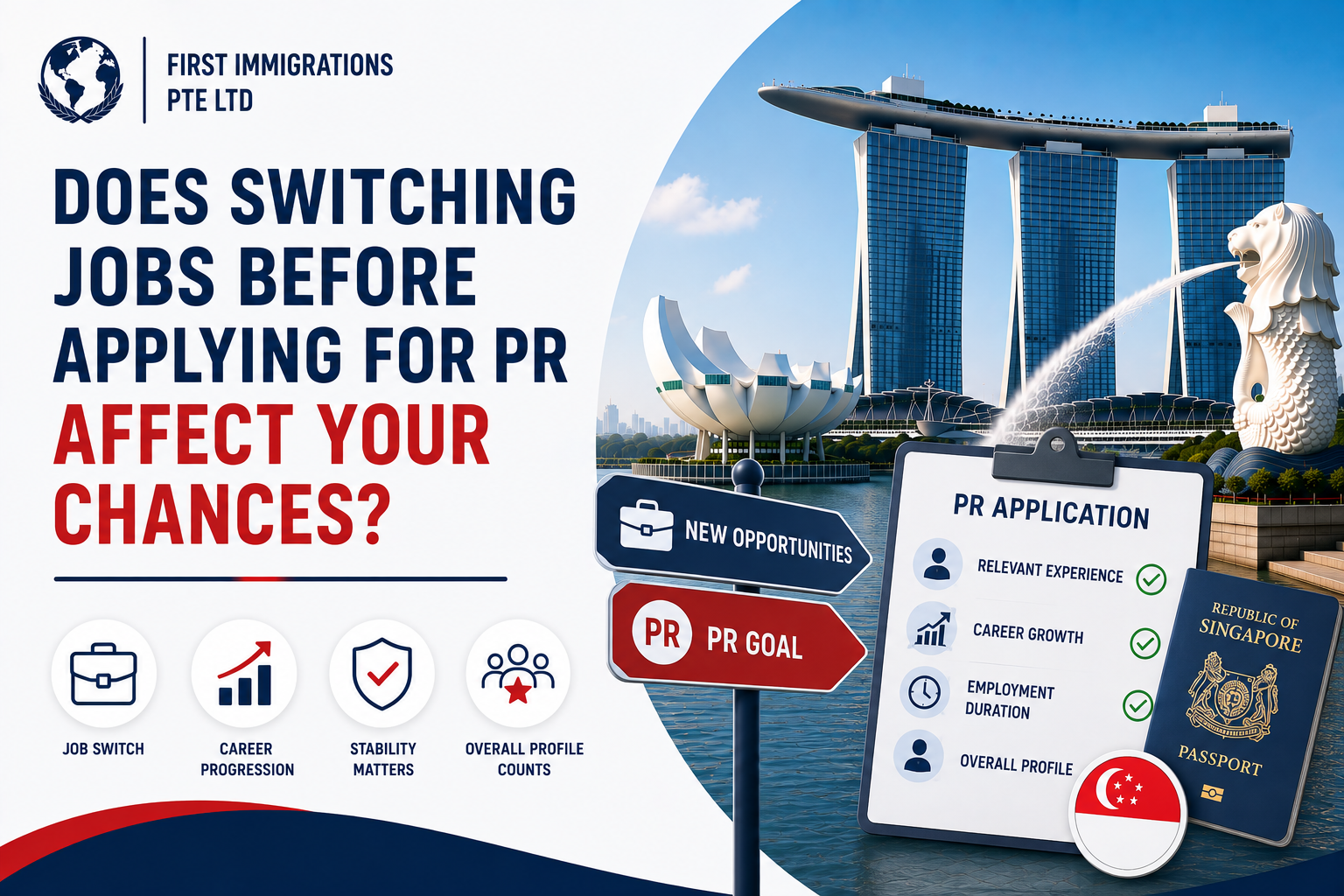
Quick answer: Yes, switching jobs before applying can affect your PR chances, in both directions. ICA values employment stability, so applying just after a job change, or while on probation, weakens your case because you have no track record in the new role. But a job change that comes with a clear promotion or salary increase can help, once you have settled in. As a rule, wait until you have been in the new job for six to twelve months before applying.
Why employment stability matters
ICA assesses PR holistically, and one of the factors it weighs is the stability and progression of your career. A steady employment history signals commitment and reliability. Frequent job changes, gaps, or a very recent move suggest instability, which is exactly what a PR assessor is wary of.
So the concern is not that you changed jobs, but when you apply relative to the change, and whether your history looks stable overall.
When a job change hurts your application
- Applying right after switching. With only weeks or a couple of months in a new role, you have no track record there, and your latest payslips and employment may look unsettled.
- Being on probation. A probationary period signals your position is not yet confirmed.
- A pattern of job-hopping. Several short stints in a row weakens the picture, whatever your current salary.
- A gap between jobs. Time unemployed just before applying reads as instability.
In these situations, it is usually better to wait until you have settled in.
When a job change helps
A job change is not automatically bad. It can strengthen your application when:
- It comes with a clear promotion or a meaningful salary increase. A rising income signals career growth, which ICA views positively.
- You move into a stronger sector or a more reputable employer. This improves the economic-contribution part of your profile.
- You have since built several months of stable tenure in the new role, so it no longer looks recent.
The key is to let the new role mature before you apply, so the change reads as progression, not instability.
The timing rule
- After a job change, wait six to twelve months in the new role before applying, so you have a settled track record and consistent payslips.
- Apply after the good news lands. If the move came with a raise, applying once you have a few months of the higher salary lets you present real momentum.
- Avoid applying during probation or immediately after starting.
For more on timing, see our guide on the best time to apply for PR.
If you have already switched jobs
Do not panic. A single, well-explained job change, especially a step up, does not sink an application. Give the new role a few months, keep your tax and CPF records consistent, and present the move as career progression. Our guides on the factors that affect your PR chances and PR application tips show how to frame it.
How First Immigration can help
Timing your application around a job change is exactly where advice helps. First Immigration helps you:
- Judge whether to apply now or wait until your new role settles.
- Present a job change as progression, not instability.
- Time your application around your salary and tenure for the strongest case.
Speak to our consultants through the contact page.
Frequently asked questions
Does switching jobs affect my PR application?
Yes. Applying just after a job change or during probation weakens your case, because you lack a track record in the new role. A change that brings a promotion or raise can help once you have settled in.
How long should I stay in a new job before applying for PR?
Generally six to twelve months, so you have a settled track record and consistent payslips in the new role.
Can I apply for PR during my probation period?
It is best to wait. Probation signals your position is not yet confirmed, which weakens the stability part of your profile.
Does a promotion help my PR chances?
Yes. A promotion or salary increase signals career growth, which ICA views positively. Apply once you have a few months at the higher salary.
Will job-hopping hurt my PR application?
A pattern of several short stints weakens the picture. A single, well-explained move, especially a step up, is not a problem.
I just changed jobs. Should I still apply?
Give the new role a few months first. A single upward move, presented as progression, does not sink an application.
Does changing employers reset my time in Singapore?
No. Your length of stay in Singapore continues; it is your tenure in the current role and overall stability that ICA reads.