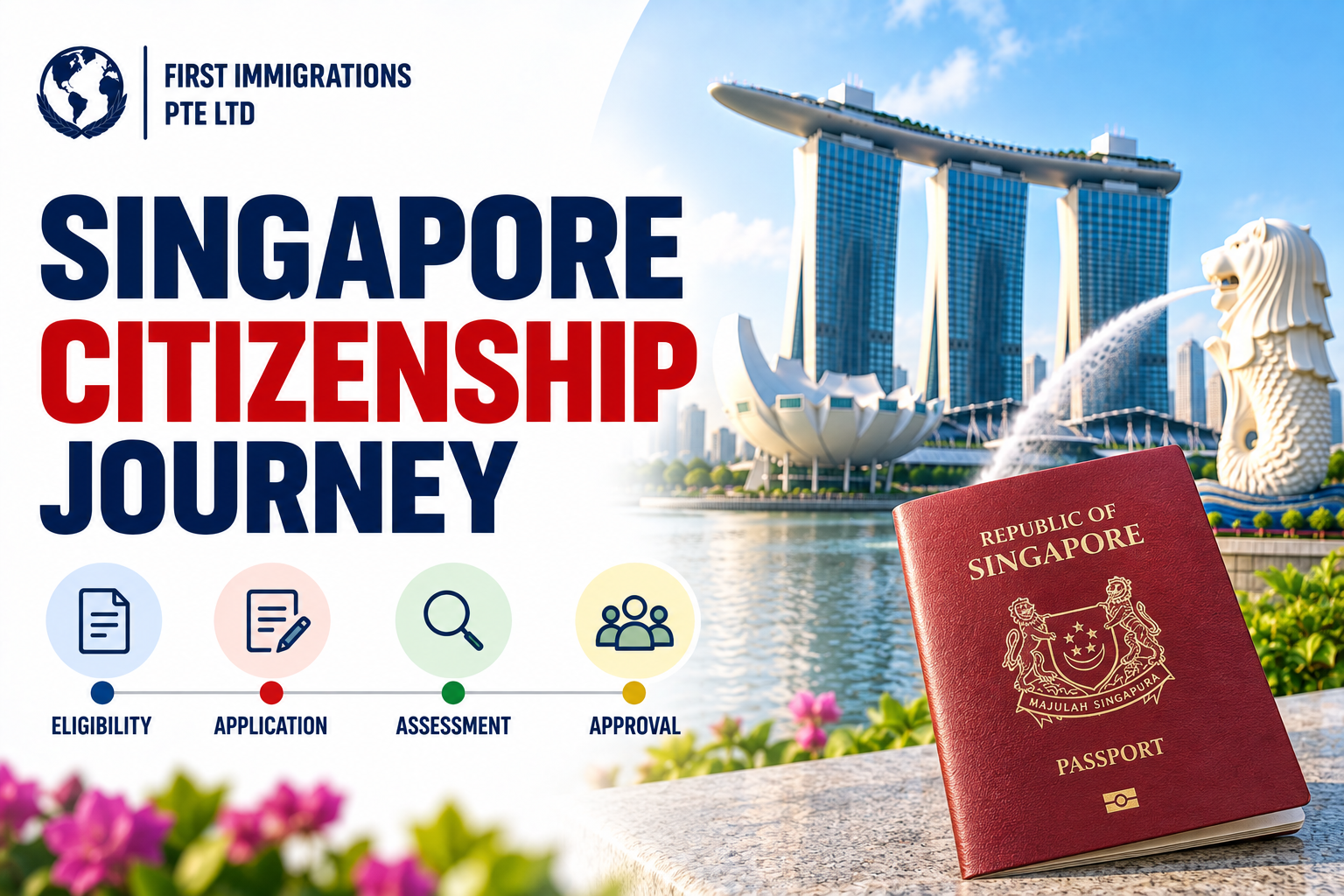
Singapore citizenship is the strongest status you can hold in the country, and it unlocks things Permanent Residence never will: the red passport, the vote, new BTO flats, the highest subsidies, and citizen-only cash schemes. This guide sets out the benefits of Singapore citizenship in 2026, with the numbers, and how each one compares to staying a PR.
Quick answer: Citizenship gives you the Singapore passport (one of the world’s strongest), the right to vote and run for office, eligibility for new BTO flats and full housing grants, the highest healthcare and education subsidies, and citizen-only support like the Baby Bonus, Edusave, and CDC and GST vouchers. The trade-off is firm: you must renounce your other citizenship (Singapore does not allow dual citizenship), and male citizens serve National Service.
Citizen vs PR: the benefits that differ
Many benefits a PR already enjoys (CPF, resale HDB, healthcare subsidies) get stronger as a citizen, and some are citizen-only. Here is where the two diverge.
| Benefit | Permanent Resident | Singapore Citizen |
| Passport | Keeps foreign passport | Singapore passport, top-tier visa-free travel |
| Voting and public office | No | Yes |
| New BTO flat | Not eligible | Eligible, with full CPF housing grants |
| Stamp duty (ABSD) on first home | 5% | 0% |
| Healthcare subsidies | Lower tier | Highest, plus CHAS and Medifund |
| Education | PR fees, no Edusave | Lowest fees, Edusave, priority placement |
| Baby Bonus and family grants | No | Yes |
| CDC, GST, U-Save vouchers | No | Yes |
| CPF | Full rates after 2 years | Full rates from the start |
The rest of this guide breaks down the big ones.
1. The Singapore passport and visa-free travel
Citizens hold the red Singapore passport, consistently ranked among the most powerful in the world, with visa-free or visa-on-arrival access to well over 180 countries and territories. A PR cannot hold it and must keep travelling on their original passport with a valid Re-Entry Permit. For frequent travellers, this alone is a major draw.
2. Voting and civic rights
Only citizens can vote in parliamentary and presidential elections, and only citizens can run for public office. As a citizen you have a direct say in the country’s direction. PRs, as foreign nationals, have no vote however long they have lived here.
3. Housing: BTO flats and full grants
Housing is one of the clearest citizen advantages.
- New BTO flats are reserved for households with at least one citizen. Two PRs cannot buy a BTO.
- Full CPF housing grants (such as the Enhanced CPF Housing Grant) go to citizen households.
- No ABSD on a first residential property for citizens, against 5% for a PR.
Over a first home purchase, these add up to a very large financial gap in a citizen’s favour.
4. Healthcare: the highest subsidies
Citizens get the top tier of subsidies at polyclinics and public hospitals, where citizen subsidies can reach around 80%, higher than a PR’s. Citizens also pay lower MediShield Life premiums for the same cover, and have access to CHAS subsidies at GP and dental clinics and Medifund assistance, which are citizen benefits PRs do not get in the same way.
5. Education: Edusave and lower fees
Citizen children pay the lowest school fees and get an Edusave account automatically, topped up by the government each year for enrichment and school costs. Citizens also get priority in school placement and broader access to bursaries, scholarships, and subsidised university fees. PR children pay higher fees and have no Edusave account.
6. Baby Bonus and family support
Citizen families get parenthood support that PRs do not. As of 2026 this includes:
- A Baby Bonus Cash Gift of around S$11,000 for the first and second child, and S$13,000 for the third and beyond.
- A Child Development Account (CDA) First Step grant of S$5,000, plus government dollar-for-dollar matching on savings.
- Childcare subsidies and parenthood tax reliefs and rebates.
These are meaningful sums that only citizen children receive.
7. Government cash support
Citizens receive recurring government support that PRs and foreigners do not, such as CDC Vouchers (around S$800 a year per household), GST Vouchers, U-Save utility rebates, and various LifeSG cash grants. Individually modest, together they add up over the years.
8. CPF, employment, and family
- CPF: citizens are on full contribution rates from the start, while new PRs are on lower graduated rates for their first two years.
- Employment: like PRs, citizens need no work pass and face no quota or levy, with complete job freedom.
- Family sponsorship: citizens can sponsor a wider circle of family, including aged parents, more readily than PRs.
Figures above reflect 2026 schemes and change with each Budget, so confirm current amounts before relying on them.
The trade-offs to weigh
Citizenship is the strongest status, but it comes with two firm conditions:
- You must renounce your other citizenship. Singapore does not allow dual citizenship for adults, and re-acquiring a renounced nationality is very hard. See our guide on whether Singapore allows dual citizenship.
- National Service. Male citizens (and second-generation male PRs) serve NS. See our guide on whether PRs need to serve NS.
Is citizenship worth it over PR?
For those settled in Singapore for the long term, the benefits are substantial: the passport, the vote, BTO eligibility, top subsidies, and family cash schemes together outweigh what PR offers. The deciding question is usually whether you are ready to give up your other passport for good. If you are, citizenship is the stronger status; if keeping your original nationality matters more, PR may suit you better. Our comparison of PR vs citizen and guide to PR benefits lay out both sides.
How First Immigration can help
Deciding on citizenship, and applying successfully, both benefit from clear advice. First Immigration helps you:
- Weigh citizenship against staying a PR for your situation.
- Confirm your eligibility and the right time to apply.
- Prepare a strong, complete application.
- Plan around renunciation and National Service.
See our guides on Singapore citizenship eligibility and requirements, explore our Singapore citizenship service, or speak to our consultants through the contact page.
Explore our Singapore citizenship service, or speak to our consultants through the contact page.
Frequently asked questions
What are the main benefits of Singapore citizenship?
The Singapore passport, the right to vote and run for office, eligibility for new BTO flats and full housing grants, the highest healthcare and education subsidies, and citizen-only schemes like the Baby Bonus, Edusave, and CDC and GST vouchers.
What can a citizen do that a PR cannot?
Hold a Singapore passport, vote, run for public office, buy a new BTO flat, and receive citizen-only cash schemes and the highest subsidies.
How strong is the Singapore passport?
It is consistently ranked among the most powerful in the world, with visa-free or visa-on-arrival access to well over 180 countries and territories.
Do citizens pay less for housing than PRs?
Yes. Citizens can buy new BTO flats, receive full CPF housing grants, and pay no ABSD on a first home, against 5% for a PR.
What family benefits do citizens get?
Citizen children receive the Baby Bonus Cash Gift, a Child Development Account with government matching, an Edusave account, and childcare subsidies, none of which PR children get.
Do I have to give up my current citizenship?
Yes. Singapore does not allow dual citizenship for adults, so you must renounce all other citizenships to become a citizen.
Do citizens have to do National Service?
Male citizens are liable for National Service, as are second-generation male PRs.
Is citizenship better than PR?
For long-term residents ready to give up their other passport, yes. Citizenship offers stronger benefits across travel, housing, subsidies, and family support. PR suits those who want to keep their original nationality.